India’s sporting identity contains multitudes that the cricket-dominated international coverage consistently fails to capture. A nation of 1.4 billion people across 28 states, hundreds of languages, and thousands of distinct cultural traditions has developed sporting practices as diverse as its population — from ancient martial arts forms that predate organized international sport by millennia to regional games whose passionate local followings rival any globally broadcast competition in emotional intensity. Understanding how indian sports are growing requires looking beyond the international medal tables into the grassroots sporting culture that is simultaneously preserving traditional forms and building the foundation for future global competitive excellence. Fans following Indian sport across all disciplines can find dedicated coverage at db bet.
Indian National Sports: The Official and the Cultural
The question of indian national sports reveals an interesting gap between official designation and cultural reality. Field hockey holds the designation of India’s national sport — a reflection of the golden era when Indian hockey dominated the Olympic Games across multiple decades, winning eight gold medals between 1928 and 1980 in one of international sport’s most sustained periods of national dominance. The cultural reality of which sport commands the greatest Indian attention is unambiguously cricket — a sport introduced through colonial contact that has been so thoroughly absorbed into Indian identity that it functions as the dominant organizing principle of sporting life for hundreds of millions of people. The tension between official designation and cultural dominance reflects a broader question about what national sports identities actually mean — whether they reflect current cultural priorities or honor historical achievements that contemporary participation levels no longer sustain.
Cricket’s Cultural Dominance and Its Development Infrastructure
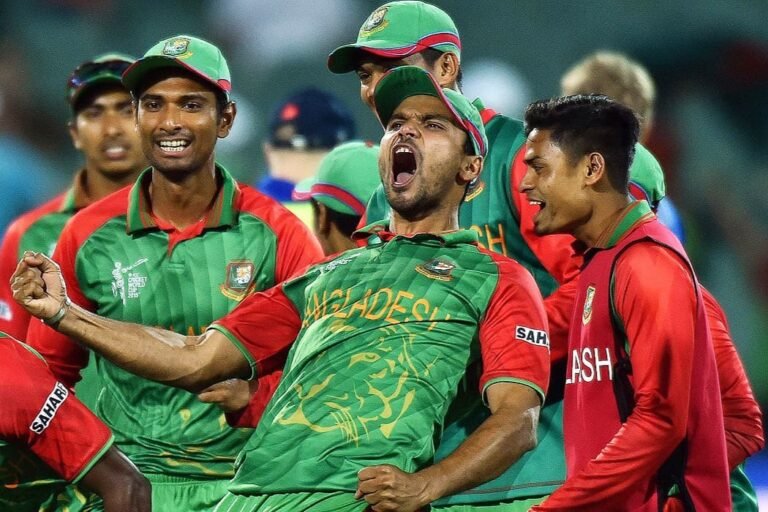
No discussion of indian sports avoids cricket’s gravitational pull — the Board of Control for Cricket in India is the wealthiest cricket board in the world, the Indian Premier League is the most commercially valuable cricket competition globally, and the national team’s results affect public mood with an intensity that no other sporting outcome in India approaches. The development infrastructure beneath this commercial peak reflects the investment that cricket’s financial strength enables — district-level academies, state association programs, and the IPL’s talent identification systems that collectively create the most comprehensive cricket development pathway in the world. The challenge this creates for other sports is real and consistently discussed: the resources, coaching talent, parental ambition, and media attention that flow toward cricket represent an opportunity cost for every other discipline competing for India’s sporting talent pool.
Hockey’s Revival: Reclaiming National Sport Status
Indian field hockey’s recent performances have injected genuine optimism into conversations about the sport’s domestic revival — a revival that matters beyond medal tallies into the question of whether a sport with deep historical roots can rebuild grassroots participation and commercial viability alongside elite competitive excellence. The men’s Olympic bronze medals at Tokyo and Paris represent the highest international achievements in decades and have generated media attention that previous generations of Indian hockey players did not receive despite comparable or superior performances in less commercially developed eras. The Hockey India League’s return — the franchise competition that provides domestic players with professional playing environments and exposure to international teammates — creates the commercial platform that development investment requires. Odisha’s sustained sponsorship and infrastructure commitment remains the primary model for how state-level partnership can transform a sport’s development ecosystem.
Kabaddi: The Traditional Sport That Became a Modern Franchise
Kabaddi’s transformation from a traditional rural game played across the subcontinent for centuries into the Pro Kabaddi League — one of India’s most watched domestic sports competitions — represents the most successful commercialization of a traditional Indian sport in the country’s sporting history. The PKL’s franchise model, its television broadcast agreements, and the player auction system that creates commercial value for athletes in a discipline that previously offered no professional pathway combined to create a sports property whose viewership figures rival established global sports competitions within the Indian television market. Kabaddi’s core activity — the raiding and defensive mechanics whose combination of breath-holding endurance, explosive athleticism, and tactical positioning creates genuine sporting drama — translates to broadcast entertainment in ways that traditional sport administrators did not fully recognize until the franchise model demonstrated the commercial potential. The league’s success has inspired similar commercialization attempts across other traditional disciplines.
Regional Sports of India: The Diversity Beneath the Headlines
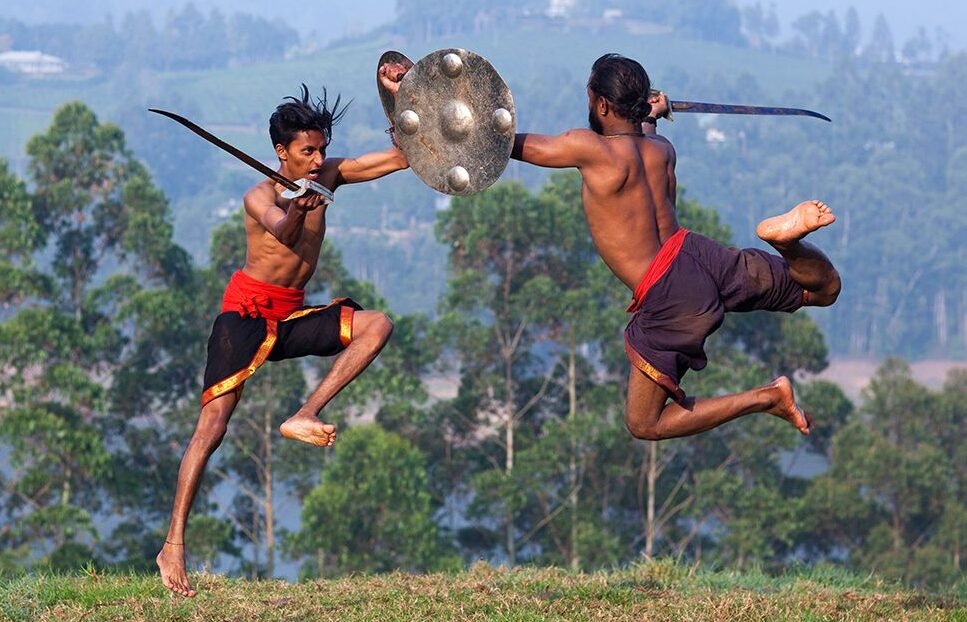
Regional sports of India reflect cultural diversity that a unified national sporting narrative inevitably flattens. Kalaripayattu — the ancient martial art from Kerala whose movement vocabulary has influenced dance forms, theatrical traditions, and combat systems across South and Southeast Asia — carries a cultural significance in Kerala that extends far beyond its modest international competitive profile. Thang-ta, the Manipuri martial art that combines sword and spear techniques with a philosophical framework deeply embedded in Meitei cultural identity, represents a form that faces both the challenge of preservation and the opportunity of contemporary relevance as martial arts gain global interest. Gatka — the Sikh martial art of the Punjab whose weapon-based combat forms are performed at religious festivals and cultural celebrations — maintains community practice through a religious and cultural connection that purely sporting motivation cannot replicate. These forms are not merely historical curiosities but living practices whose continued vitality reflects the communities that maintain them.
Wrestling: India’s Olympic Medal Factory
Indian wrestling has produced the country’s most consistent Olympic medal performers across the modern era — a competitive tradition rooted in the akhara system of traditional wrestling training that has been progressively integrated with international freestyle and Greco-Roman competitive formats. The Haryana state wrestling culture — producing a disproportionate share of India’s national and international wrestling champions through a community investment in the sport that spans generations — demonstrates how regional sporting culture creates the talent density that individual excellence requires. Sushil Kumar’s two Olympic medals — bronze in Beijing and silver in London — established wrestling’s Olympic medal potential for Indian audiences and triggered investment in the sport that the subsequent generation has converted into additional podium performances. The wrestling academy ecosystem that has developed across Haryana, Punjab, and Uttar Pradesh reflects how deeply the sport is embedded in the cultural identity of those regions’ communities.
Shooting: India’s Silent Olympic Powerhouse
Indian sport’s most consistent Olympic medal discipline — measured by the ratio of medals to total athletes competing — is shooting, a fact that the sport’s relative invisibility in mainstream sports media makes genuinely surprising to casual observers. The Abhinav Bindra effect — his 2008 Olympic gold in the 10 meter air rifle event delivering India’s first ever individual Olympic gold medal — created an inspiration wave within the shooting community that subsequent generations of Indian shooters have converted into genuine depth across multiple events and categories. Manu Bhaker’s performances across recent Olympic cycles demonstrated that Indian women’s shooting had developed to a standard that automatic medal expectation was justified rather than optimistic. The National Rifle Association of India’s development programs, combined with state-level shooting academies across Maharashtra, Punjab, and Haryana, have created a talent pipeline whose international medal production reflects genuinely systematic development rather than isolated individual excellence.
Football’s Regional Strongholds: Kolkata, Kerala, and Goa
Indian football’s geographic concentration in specific regional strongholds — West Bengal with Kolkata’s Mohun Bagan and East Bengal clubs whose rivalry generates passion that rivals any derby in world football, Kerala’s football culture built around the state league and ISL franchise Kerala Blasters, and Goa’s football tradition rooted in Portuguese colonial cultural influence — reflects how regional identity shapes sporting participation in ways that national federation programs cannot engineer from above. The ISL’s geographic distribution — placing franchises in Mumbai, Delhi, Bangalore, Chennai, Hyderabad, and the traditional football strongholds — attempts to build football culture in new markets while sustaining it in existing ones. The challenge is creating genuine grassroots participation in markets where the ISL franchise exists as a commercial entertainment product rather than as the expression of deep-rooted community sporting culture that Kolkata and Goa football represent organically.
Badminton: Building on Champions
Indian badminton’s development trajectory — from a discipline with limited international competitive presence to one producing consistent world-class performers across both men’s and women’s singles — reflects what targeted federation investment, international coaching partnerships, and the inspiration effect of pioneering champions can achieve within a relatively compressed developmental timeline. PV Sindhu’s Olympic medals and world championship gold demonstrated that Indian badminton could compete with the Asian powerhouses — China, Indonesia, Japan, South Korea — that have historically dominated the sport. The Pullela Gopichand Academy in Hyderabad represents a coaching environment whose international reputation has attracted the best Indian badminton talent and whose development methodology has been specifically credited with producing the technical and physical foundations that Sindhu and the players who have followed her pathway demonstrate in international competition. Building depth behind the current generation’s champions is the primary developmental challenge facing Indian badminton.
The Future of Indian Sports: Infrastructure, Investment, and Identity
India’s sporting future is being constructed across multiple parallel tracks that individually represent progress and collectively suggest a trajectory whose competitive output over the next decade will exceed what the current medal tables indicate is the country’s ceiling. The Khelo India program — government investment in school and university sports infrastructure across disciplines — represents the broadest grassroots investment in Indian sporting participation in the country’s history, with the explicit ambition of building the participation base from which elite talent can be identified more systematically. The 2036 Olympic hosting aspiration — India has expressed interest in bidding for the Games — provides a long-term organizational target whose infrastructure requirements are already shaping investment decisions across venue development, athlete development programs, and sports administration capacity building. Whether that aspiration materializes or not, the organizational ambition it reflects — positioning India as a global sports power rather than merely a cricketing nation — is reshaping how the country thinks about sport’s role in national identity and international projection.