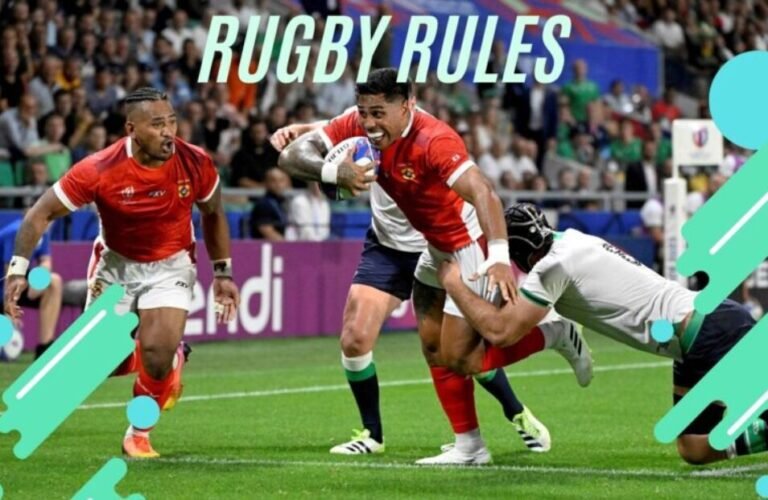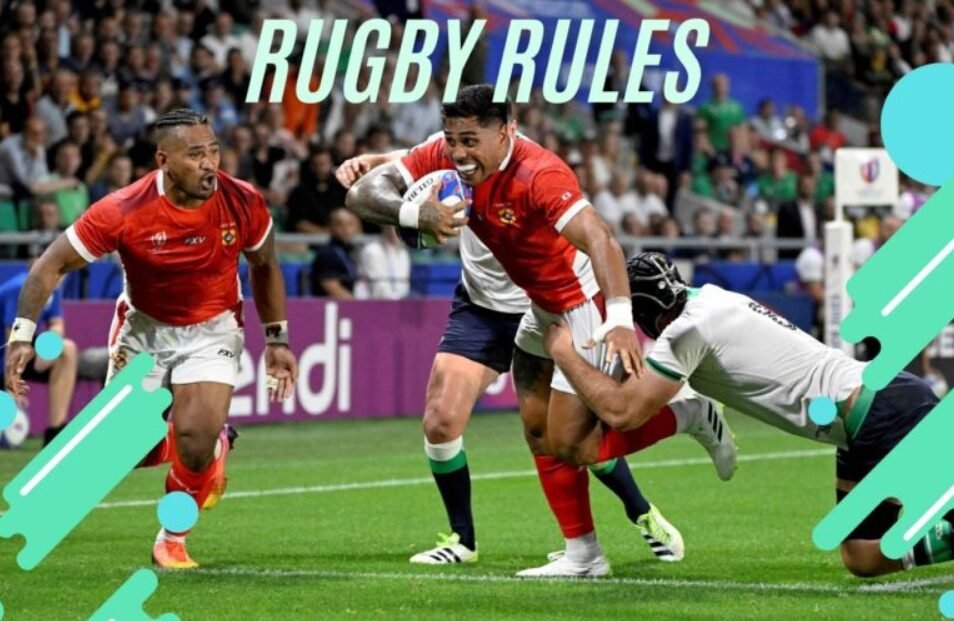
There are sports that politely invite participation. And then there are sports that demand something more immediate — physical commitment, collective courage, and a specific willingness to occupy space aggressively that separates rugby from every other major team sport in ways that players describe as genuinely transformative. Rugby doesn’t ease newcomers in gently. It presents its essential character immediately — bodies colliding, territory contested, collective effort determining outcomes in ways that individual brilliance alone cannot override.
Dbbet follows rugby with genuine analytical investment — recognizing that understanding what is rugby, how to play rugby, how long is a rugby game, and where the rugby world cup sits within the sport’s competitive hierarchy provides the foundation for appreciating a discipline that combines physical intensity with tactical sophistication in uniquely compelling combinations.
What Is Rugby?
Rugby is a full-contact team sport played with an oval ball — fifteen players per side in union, thirteen in league — whose objective involves carrying, passing, and kicking the ball across the opponent’s try line to score. Unlike most ball sports, rugby permits tackling the ball carrier directly, creating the physical confrontation dimension that defines the sport’s essential character.
The sport’s name derives from Rugby School in Warwickshire, England, where William Webb Ellis supposedly picked up a football and ran with it during an 1823 match — creating the handling tradition that distinguished rugby from association football. This origin story carries more mythology than documented historical certainty, but its cultural persistence reflects how completely rugby’s identity is embedded in its English institutional origins.
How to Play Rugby: The Basics 🏉
Understanding how to play rugby begins with the fundamental movement restriction that shapes everything else — the ball may only be passed laterally or backward, never forward. This single rule creates rugby’s distinctive attacking patterns, forcing teams to advance through ball-carrying rather than the forward passing that American football permits.
Tries — scored by grounding the ball over the opponent’s try line — earn five points, with conversion kicks adding two additional points when successfully executed. Penalty kicks and drop goals provide alternative scoring routes worth three points each. This multi-pathway scoring system creates tactical decisions throughout matches about when pursuing tries is worth the risk versus accepting penalty points that maintain or extend leads.
Set pieces — scrums and lineouts — restart play after specific stoppages, creating the structured confrontation moments that rugby’s forward-focused tactical systems are built around exploiting or defending effectively.
The Laws That Define Rugby
Rugby’s laws — the sport uses “laws” rather than “rules” reflecting its institutional origins — contain sufficient complexity that genuine understanding develops across years of playing and watching rather than single introductory readings. Several foundational laws shape competitive dynamics most completely.
The offside law prevents players from participating in play while positioned ahead of the ball — creating the specific territorial discipline that rugby requires from all fifteen players simultaneously rather than designated defensive specialists. Violations create penalty opportunities whose accumulated discipline costs frequently determine match outcomes more completely than individual brilliance.
The tackle law — requiring tackled players to release the ball immediately and tacklers to release the ball carrier — creates the contest for possession at the breakdown that generates rugby’s most tactically complex dimension. Ruck and maul situations following tackles require specific positional commitment from both teams whose management separates sophisticated tactical understanding from basic rule familiarity.
How Long Is a Rugby Game ⏱️
The answer to how long is a rugby game differs across rugby’s two major code variants — union and league — and across competitive levels within each. Standard rugby union matches at professional and international level consist of two 40-minute halves, creating 80 minutes of official playing time with a halftime interval typically lasting ten minutes.
Actual elapsed time extends beyond 80 minutes through stoppages — injury time, set piece preparation, and video referee reviews collectively adding variable time that referees account for through additional minutes played beyond each half’s official endpoint. Professional matches typically run 90 to 100 minutes of total elapsed time including halftime.
Sevens rugby — the Olympic format — uses seven-minute halves at most tournament levels, creating 14-minute matches whose brevity concentrates competitive intensity dramatically. This format’s condensed timeline makes every possession, every defensive lapse, and every individual skill expression immediately decisive in ways that 80-minute formats dilute across longer competitive arcs.
Positions: The Fifteen Players 🏟️
Rugby union’s fifteen positions divide into forwards — the eight larger players responsible for set piece work, ball carrying, and physicality — and backs — the seven faster players responsible for executing attacking movements and defensive coverage across wider field spaces.
The front row — two props and a hooker — forms the scrum’s core, requiring specific physical dimensions and technical knowledge that makes front row specialists genuinely irreplaceable rather than interchangeable with other position groups. Locks provide lineout jumping ability and carrying power. Flankers and the number eight combine athletic versatility with physical confrontation capacity.
Back positions require different athletic profiles — half-backs distributing possession and controlling game tempo, centers combining defensive physicality with attacking creativity, and back three players providing pace and finishing ability that creates the scoring opportunities forward dominance generates but cannot itself convert.
The Rugby World Cup 🏆
The rugby world cup occupies a position within rugby culture equivalent to football’s FIFA World Cup — the quadrennial competition that concentrates the sport’s competitive hierarchy into a single tournament whose winner claims rugby’s ultimate institutional validation. Established in 1987, the tournament has grown from modest beginnings into one of sport’s most commercially significant events.
New Zealand’s All Blacks have dominated rugby world cup history — three titles reflecting a national sporting culture whose relationship with rugby approaches the intensity that cricket generates in the subcontinent. The haka performed before matches carries cultural weight that transcends sport — a Māori tradition whose performance by athletes representing New Zealand communicates something about cultural identity that purely athletic competition doesn’t alone convey.
South Africa’s three World Cup victories — most recently in France 2023 — reflect a rugby program whose sustained excellence across different eras of the sport demonstrates institutional depth rather than generation-specific exceptional talent. England’s 2003 victory, secured through Jonny Wilkinson’s iconic drop goal in extra time against Australia, provided British rugby its defining modern competitive memory.
Rugby’s Physical Demands 💪
Rugby’s physical requirements span a broader athletic spectrum than almost any other team sport — requiring genuine size and strength for forward positions alongside genuine pace and agility for back positions within the same team simultaneously. This physical diversity means rugby teams contain athletes whose body types and athletic profiles would succeed in entirely different sports if rugby hadn’t claimed their competitive development.
Modern professional rugby’s physical demands have increased dramatically across recent decades — players significantly larger, faster, and more physically powerful than equivalent positions from twenty years ago. This physical evolution has created genuine player welfare concerns that governing bodies are actively addressing through rule modifications, contact law interpretations, and research investment into long-term head injury implications.
Global Growth and New Markets 🌍
Rugby’s global footprint has expanded significantly beyond its traditional British, Southern Hemisphere, and French strongholds — the World Rugby governing body actively developing the sport across Asia, the Americas, and Africa through investment programs that prioritize genuine competitive development over token participation.
Japan’s 2019 World Cup hosting — and the Japanese team’s extraordinary performance reaching the quarterfinals — demonstrated that Asian rugby had genuinely arrived at international competitive credibility rather than simply providing exotic hosting locations for established rugby nations’ competitions. The Brave Blossoms’ wins against Ireland and Scotland produced moments that Japanese sporting culture celebrated with intensity that revealed how completely rugby had embedded itself within the country’s sporting identity.
Rugby sevens’ Olympic inclusion since Rio 2016 has introduced the sport to genuinely new global audiences — the format’s accessibility and excitement creating entry points for nations whose fifteen-player rugby development remains in earlier stages but whose sevens programs can compete meaningfully within shorter development timelines.
Why Rugby Endures
Rugby’s sustained global growth — across cultural contexts as different as Fiji, Georgia, Argentina, and Japan — reflects something genuine about what the sport offers that other contact sports don’t equivalently provide. The specific combination of collective physical commitment, individual skill expression, and tactical complexity creates a participation experience that players consistently describe as unlike anything else available in sport.
The values rugby formally promotes — respect, integrity, solidarity, passion, discipline — aren’t merely institutional marketing language. They emerge organically from a sport where physical interdependence between teammates is so complete that genuine collective commitment is practically necessary rather than merely philosophically desirable.
That authentic connection between sport’s physical demands and its stated values is ultimately what makes rugby worth playing, worth watching, and worth the institutional investment that its continued global growth represents.