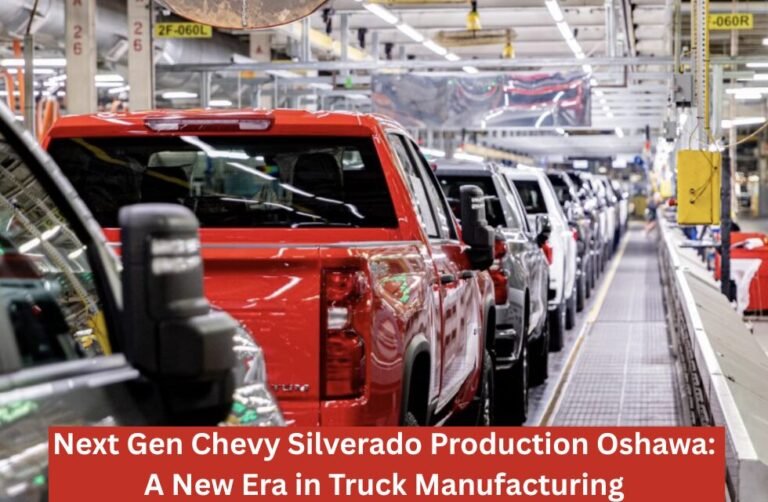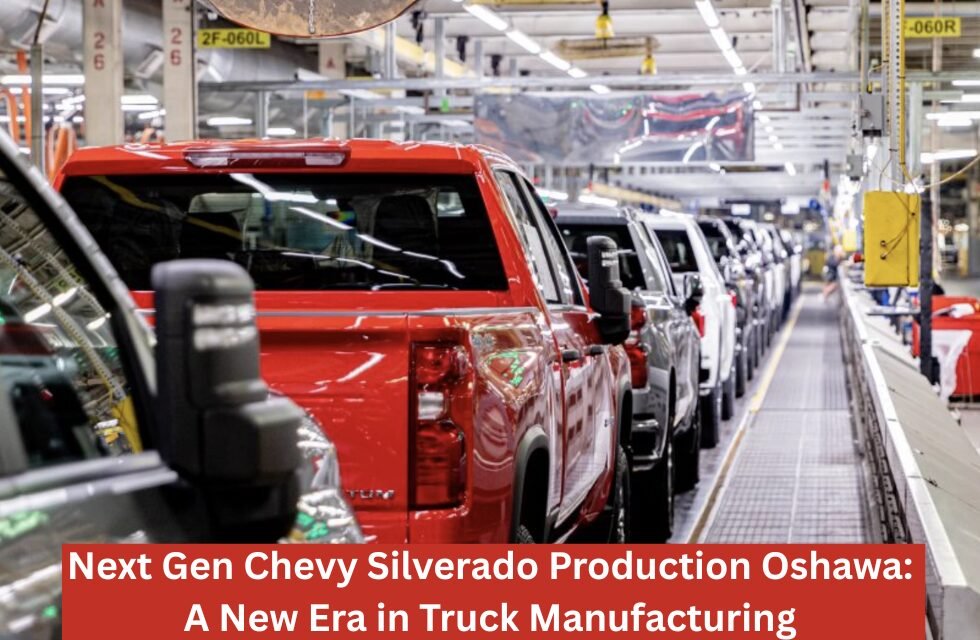
The Next Gen Chevy Silverado Production Oshawa venture is a great change in the way the current pickup trucks are manufactured. This project, as opposed to a mere implementation of a new model, is a larger-scale change in how vehicles are made, introducing new technology in production, digital technology in factories, and flexible manufacturing lines to one of the most significant General Motors (GM) plants in the United States of America.
The centre of this change is the Oshawa Assembly Plant in Ontario, Canada, a factory that is changing its old assembly work into a smart, flexible facility that is able to manufacture the next generation Chevrolet Silverado trucks and also establish a new trend in automotive manufacturing.
Why the Oshawa Plant Is Central to Next-Gen Silverado Production
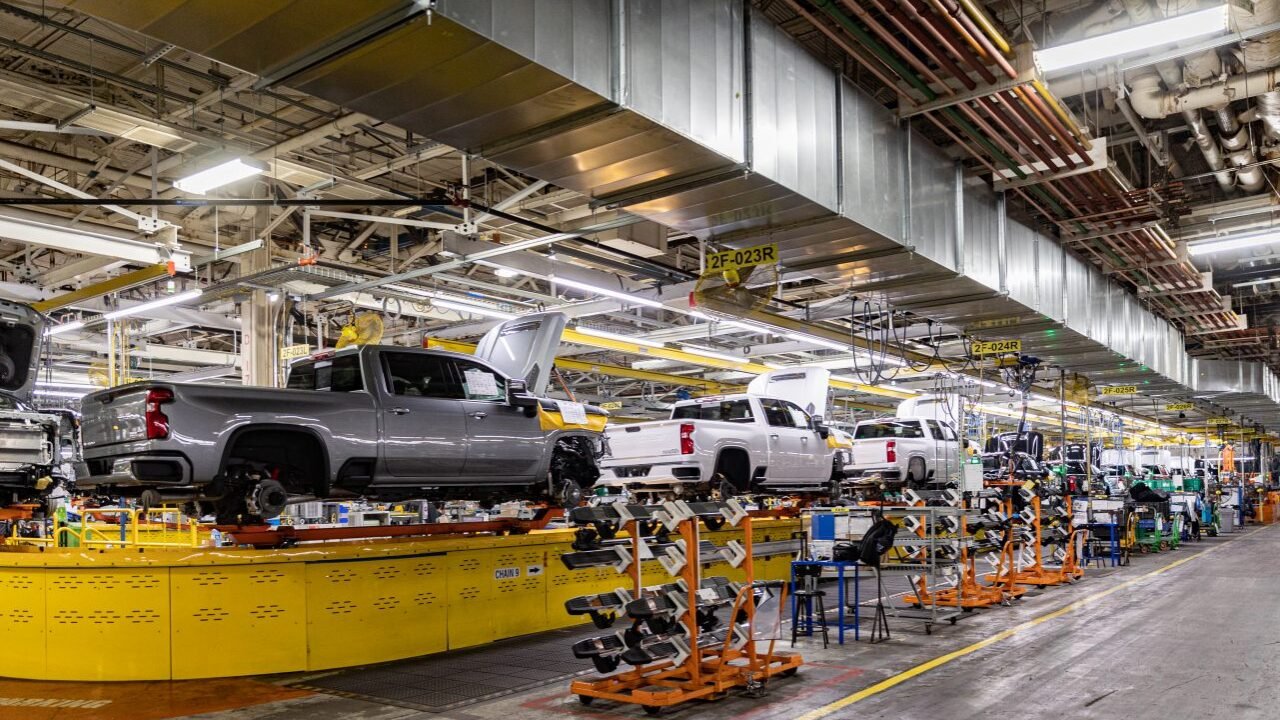
Next Gen Chevy Silverado Production Oshawa has made the Oshawa Assembly Plant the heart of the company due to its ability to integrate a history of manufacturing knowledge and the contemporary digital world. After concentrating on the past systems of production, the facility has integrated dynamic assembly spaces that can accommodate the intricate designs of vehicles and can easily change with the fluctuation in production demand.
Oshawa is best suited to take this position because of several reasons:
- Diversified positioning near North American supplier networks.
- State of the art assembly lines, updated tooling, and robotics.
- Expandable systems to accommodate changing production requirements.
- Professional labor force that has experience in the building of trucks.
- Improved logistic systems to facilitate on-demand supply chains.
This mix enables GM to not only manufacture next-generation Silverados in an efficient way but also develop smart factory technologies which are only getting more significant in the production of automobiles.
How Next-Gen Silverado Production Is Different
The Chevrolet Silverado is not only the next generation in the design of the vehicle, but a total redesign of the truck manufacturing process.
GM has adopted the use of modular production cells that allow quick adaptation across the line as opposed to using the rigid and linear assembly pipeline methods. These cells permit any variant of a vehicle to be built in parallel, without stopping the whole operation, which is better at uptime and flexibility.
The innovations to consider in this arrangement include:
- Modular chassis assembly
- Quality control with the help of AI.
- Maintenance prediction systems.
- Digital twin simulations
- Continuous manufacturing analytics.
Such physical flexibility coupled with digital intelligence will reduce downtime, speed up the throughput and lay the foundation of a leaner manufacturing process in the following models.
Smart Factory Technologies Behind the Scenes
Smart factory is at the heart of Next Gen Chevy Silverado Production Oshawa. IoT sensors, machine learning algorithms, and cloud-based systems can collaborate to form a production line that is self-adjusting and optimizing itself continuously.
Such technologies assist in capturing vital information, such as all the information that includes torque and vibration to quality checks, and directing them to platforms that could identify anomalies and propose corrective measures in real time.
For example:
- Data regarding manufacturing is gathered by edge sensors.
- Industrial networks are usually private and therefore guarantee speedy communication.
- The AI analytics engines detect problems before they impact manufacturing.
- Dashboards provide the engineer with a real-time view of the performance of the plant.
This layer of tools transforms the production process into the field of data-driven science, within which it is possible to make decisions in seconds and streamline processes at a consistent pace.
Automation That Enhances, Not Replaces, Human Skill

A widespread misperception is that contemporary production is equal to complete automation. The emphasis at the Oshawa plant, however, is on hybrid automation, i.e., the combination of robot and human labor.
Cobots, also known as collaborative robots, can be used to place heavy components, robots can also be used in precision welding and automated guided vehicles can also be used in material management. In the meantime, high-quality personnel carry out inspections, quality services, and activities with human assessment.
This approach ensures:
- More accuracy and few mistakes.
- More rapid fabrication of complicated parts.
- A safer work environment
- Ability to make immediate production changes.
Read Also: When Is UStudioBytes Going to Be Live? Launch Timeline & Beta Access
Software Systems Powering the Production Line
The physical automation and robotics are followed by a system of software that coordinates the whole process. These include:
- Production scheduling Execution Systems (MES).
- Inventory and procurement Enterprise Resource Planning (ERP).
- Lifecycle management products (PLM).
- SCADA tools of Supervisory Control and Data Acquisition (SCADA).
- Artificial intelligence quality control systems.
The combination of these enables the use of these systems to make production workflows more coordinated, handle inventory in real time, and capture and analyze quality data automatically.
With the increased software-centric nature of manufacturing, developers and IT departments are becoming more important in vehicle production, and modern manufacturing is becoming more of a software and data-driven endeavor than a machine and tools enterprise.
Final Word
The Next Gen Chevy Silverado Production Oshawa project is not just an update to the production of the truck, but a roadmap as to how a car company can become digital in the future. Through smart automation, data platforms, upskilling of its workforce, and flexible production layouts, GM is showing how old-fashioned factories can respond and survive in an Industry 4.0 era.
With the automotive industry still undergoing the digital transformation, the facility such as Oshawa will not only assemble automobiles, but will set the standards of efficient intelligent manufacturing in the future decades.
FAQs
- Where does the Chevy Silverado next generation get manufactured?
The Chevy Silverado is a model of truck currently being manufactured at the Oshawa Assembly Plant located in Ontario, Canada.
- Why then was GM producing Silverado at Oshawa?
GM chose Oshawa because it was located in a strategic position, there was a strong work force, modernity in its infrastructure and the capability to sustain flexible manufacturing structures.
- Is Oshawa plant well automated?
No, the Oshawa plant has a hybrid approach combining collaborative robotics with human skills in the most flexible and quality approach.
- What are the technologies involved in next-gen Silverado?
To increase efficiency and quality, production is based on the IoT sensors, AI systems, digital twin simulations, MES, and ERP platforms, and modern robotics.
- Will the other factories be affected by this model of production?
Yes, the strategy of Oshawa provides the understanding of how the old manufacturing plants can use smart technologies and data systems to modernize the industry.
Read More: 2026 Toyota RAV4 Review: Hybrid Power, New Tech and Home-Backup Energy