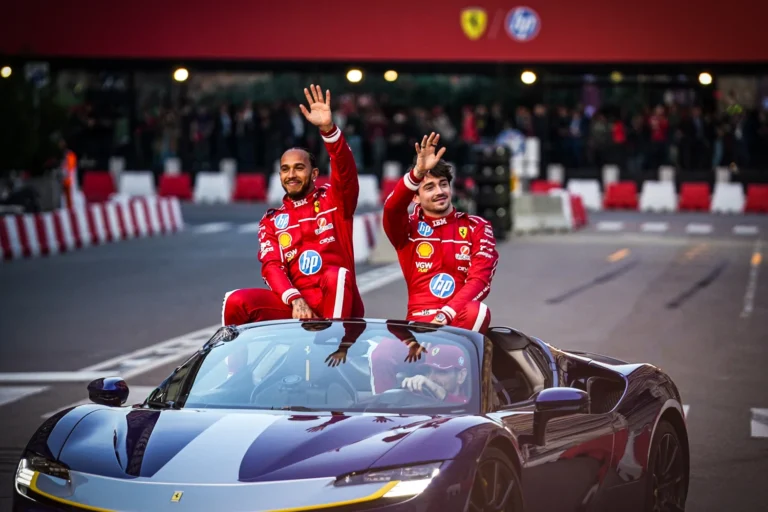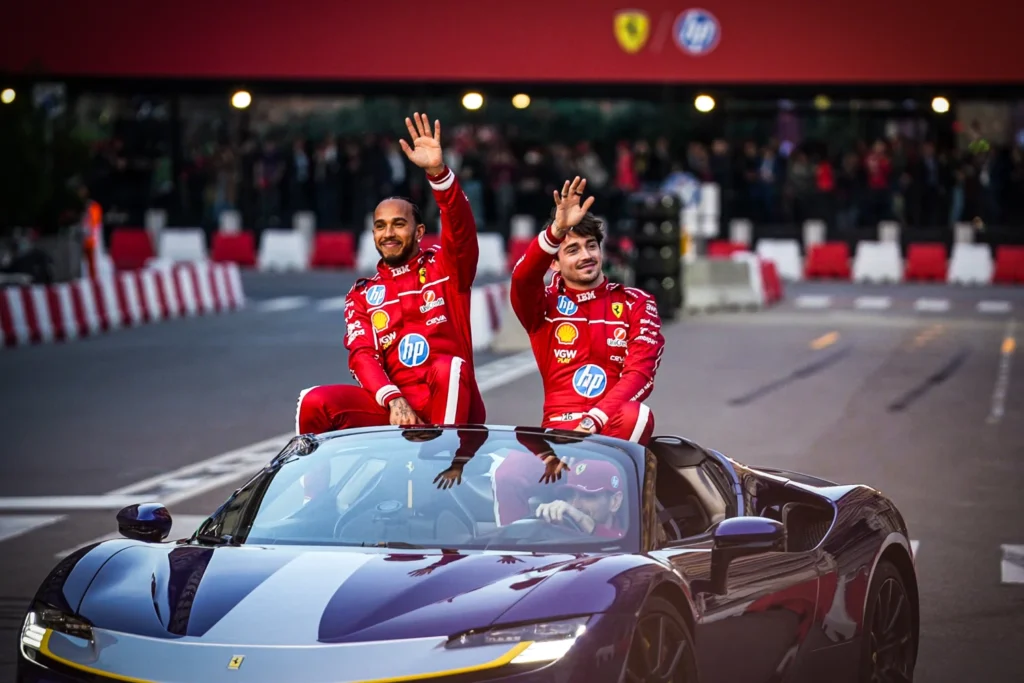
Sport occasionally produces figures whose significance transcends the specific competition they excel in — athletes whose career arc, personal story, and public presence make them cultural phenomena whose meaning extends well beyond the results that define their competitive record. Lewis hamilton is unambiguously one of these figures — a seven-time World Champion whose Formula One achievements are matched by the broader cultural contribution he has made to conversations about diversity, representation, and advocacy that competitive sport rarely produces from its most commercially valuable performers. His move to Ferrari opens the most compelling chapter of a career that has already delivered more than any reasonable expectation could have demanded. Fans following every race weekend can find dedicated markets at dbbet.
The Foundation: From Stevenage to Formula One History
Hamilton’s origin story carries a specific resonance within motorsport’s historically exclusive demographic landscape — a Black British driver from a working-class Stevenage background reaching Formula One’s pinnacle through a combination of extraordinary natural talent and a family financial sacrifice that his father Anthony Hamilton made by working multiple jobs to fund the karting career that professional attention eventually replaced.
His arrival at McLaren in 2007 — immediately challenging for the championship in his rookie season in performances that rewrote expectations about what debut F1 seasons could achieve — announced a talent whose ceiling the sport had not previously encountered in quite that concentrated form. The specific qualities visible from those earliest races — the overtaking intuition, the qualifying pace, and the ability to manage competitive pressure in situations that break less exceptional competitors — established the competitive profile that subsequent seasons developed rather than fundamentally created.
The 2008 championship — won on the final corner of the final lap of the final race in Brazil when Timo Glock’s slow final sector promoted Hamilton from fifth to the fifth place he needed — delivered his first title in the circumstances that define careers rather than merely punctuating them. That specific moment’s drama created the relationship between Hamilton and championship pressure that subsequent seasons consistently demonstrated he thrived under rather than wilted within.
The Mercedes Dynasty: Seven Championships
Hamilton’s move to Mercedes in 2013 — following Michael Schumacher’s final retirement seasons with the Silver Arrows — was initially questioned within the paddock as a step away from the McLaren machinery that had produced his championship and toward a team whose competitive trajectory was unclear. The subsequent decade validated the decision more completely than even Hamilton’s most optimistic supporters could have anticipated.
The hybrid era that began in 2014 delivered Mercedes a power unit advantage whose magnitude transformed the competitive landscape — and Hamilton’s partnership with the machinery Aldo Costa and the Silver Arrows engineering team built produced six consecutive championships between 2014 and 2020, interrupted only by Nico Rosberg’s 2016 title won through the specific circumstances that internal team dynamics and Hamilton’s own occasional lapses created across that season.
The seventh championship in 2020 — equaling Michael Schumacher’s record that had seemed unreachable when Hamilton entered Formula One — was won in the specific context of a pandemic-compressed season that delivered the statistical milestone while the specific validation that beating Schumacher’s record required inevitably invited debate about the competitive context within which the equality was achieved. Hamilton’s own response — characteristically gracious about Schumacher’s legacy while accepting his own achievement with the quiet confidence that genuine greatness allows — reflected the public maturity that his career’s later phase expressed more consistently than its earlier, more combustible chapters.
Lewis Hamilton Ferrari: The Decision That Changed Everything
The announcement that lewis hamilton ferrari was becoming reality — that he would leave the Mercedes team that had delivered six of his seven championships to join Scuderia Ferrari — created the specific narrative electricity that Formula One had not experienced since comparable driver-constructor landmark announcements reshaped previous competitive eras.
The motivations that informed the decision reflect genuine complexity rather than simple competitive calculation. Ferrari’s historical mythology — the most storied constructor in Formula One history, the team whose championship success would complete every dimension of what Formula One’s legacy means — provides the specifically emotional dimension that purely rational competitive analysis would not have prioritized over remaining within the organizational environment that had delivered six championships.
The competitive calculation is equally genuine — the 2026 regulatory reset’s simultaneous changes to power unit and aerodynamic regulations create a competitive landscape whose specific uncertainty offers Hamilton a genuine chance of championship contention in Ferrari colors if the Maranello technical team produces a competitive package. A Mercedes continuation offered organizational comfort but no competitive guarantee superior to what Ferrari could provide in the new regulatory environment.
The pairing with Charles Leclerc creates the internal competitive dynamic that Ferrari must manage with sophistication — two drivers of genuine championship caliber sharing machinery within an organization whose history of internal driver politics is extensively documented. How Ferrari navigates the Leclerc-Hamilton relationship, whose competitive tensions are structurally inevitable, will determine whether the partnership delivers its potential or produces the internal dysfunction that ambitious driver pairings occasionally generate.
Hamilton F1 Legacy: Beyond the Numbers
Hamilton f1 legacy exists simultaneously in the statistical record that competitive performance has produced and in the broader cultural contribution that his public presence has made to conversations that sport rarely engages with honestly from within its commercial core.
The statistical record speaks with unusual clarity — 103 race victories, 104 pole positions, seven World Championships, and the all-time leads across virtually every significant Formula One performance metric. Numbers that create a specific GOAT argument whose competing cases — Michael Schumacher’s seven championships won across different eras, Ayrton Senna’s transcendent talent expressed across a shorter career, Juan Manuel Fangio’s championships as a proportion of races entered — reflect different frameworks for evaluating greatness rather than genuine uncertainty about whether Hamilton belongs within the conversation’s highest tier.
The cultural contribution extends beyond the competitive record into what Hamilton’s public advocacy on racial equality, diversity in motorsport, and the specific responsibility that elite sporting platform creates for its most commercially visible figures has meant for conversations the sport had historically avoided. His activism — the Taking the Knee gestures before races, the #WeRaceAsOne campaign whose organizational support from Formula One reflected his specific influence within the commercial ecosystem, and the sustained public engagement with social justice issues that his platform enables — has made him the sport’s most socially significant figure alongside its most competitively successful.
The Ferrari Challenge: What Success Requires
Hamilton’s championship ambitions at Ferrari depend on variables whose alignment the 2026 regulatory reset makes genuinely uncertain in ways that his Mercedes partnership’s organizational predictability never required him to navigate. Success requires the technical team producing a car whose competitive package matches Hamilton’s feedback quality and driving style — a combination whose specific compatibility the early development seasons will establish rather than the announcement confirming.
The specific qualities Hamilton brings to Ferrari’s technical development — his ability to describe car behavior in terms that engineers translate into setup improvements, accumulated across 18 seasons of F1 development partnerships whose institutional knowledge is the deepest in the contemporary paddock — provide organizational value whose expression in faster car development could compress the timeline between Ferrari’s competitive aspiration and championship reality.
Managing his own adaptation to Ferrari’s organizational culture, engineering language, and the specific working relationships that delivering consistent championship-level performance requires building from fresh foundations — presents the specific transition challenge that even seven-time world champions must navigate when changing organizational environments after extended periods within a single team’s specific culture.
What Remains to Be Written
The Ferrari chapter’s specific outcome — whether it delivers the eighth championship that would definitively settle Hamilton’s GOAT argument on the only terms that Formula One’s competitive framework ultimately recognizes, or concludes as a compelling narrative whose competitive results fell short of the aspirations that motivated the move — remains genuinely open in ways that historical analysis cannot predetermine.
What is certain is that Hamilton’s Ferrari years will be followed with the attention that the combination of the sport’s most decorated driver and its most storied constructor merits — that every race result will be interpreted within the framework of whether the partnership is delivering its potential, and that the specific performances Hamilton produces in Ferrari red will be understood as the final chapter of a career whose significance Formula One history will continue evaluating long after his final race.