The athletes competing at the highest levels of global sport today are the product of decisions made about them when they were eight, ten, or twelve years old. Which sport they were introduced to, whether a qualified coach was present, whether the environment felt safe and encouraging enough to keep them coming back — these early experiences shape sporting trajectories in ways that no amount of elite-level investment can reverse if the foundation was poorly laid. Building competitive sport from the ground up is the most important and least glamorous work in athletic development. Fans following sport across all levels and markets can find dedicated coverage at dbbet nigeria.
What Sports Education Actually Means
Sports education is a term that covers significant conceptual ground — from physical education delivered in school curricula to structured coaching programs in community settings to the formal development pathways that feed talented young athletes into competitive structures. The common thread is intentionality: sports education implies deliberate design around learning outcomes rather than simply providing space and equipment and hoping development follows organically. In its most effective forms, sports education teaches physical literacy — the movement vocabulary and body awareness that allows individuals to participate competently across multiple sports — alongside the sport-specific skills that competition demands. Programs that treat physical literacy as the foundation and sport-specific development as the subsequent layer produce more versatile, injury-resistant, and ultimately more competitive athletes than programs that specialize too narrowly too early.
Grassroots Development: Why the Foundation Determines the Ceiling
Grassroots development is the infrastructure layer that determines how many athletes enter the development pipeline in the first place and at what quality level they arrive at the next stage. A grassroots system that reaches every child regardless of geography, economic background, or physical starting point creates the broad base from which elite sport’s pyramid can actually function — the wider the base, the more likely that genuine exceptional talent is identified rather than overlooked because it happened to grow up in the wrong district or attend the wrong school. Countries that invest seriously in grassroots sport — France’s football academies, Kenya’s athletics infrastructure, Australia’s various national institute programs — consistently outperform their population size in international competition precisely because broad grassroots participation creates the talent density that elite development can then work with effectively.
Junior Athletes: The Critical Development Window
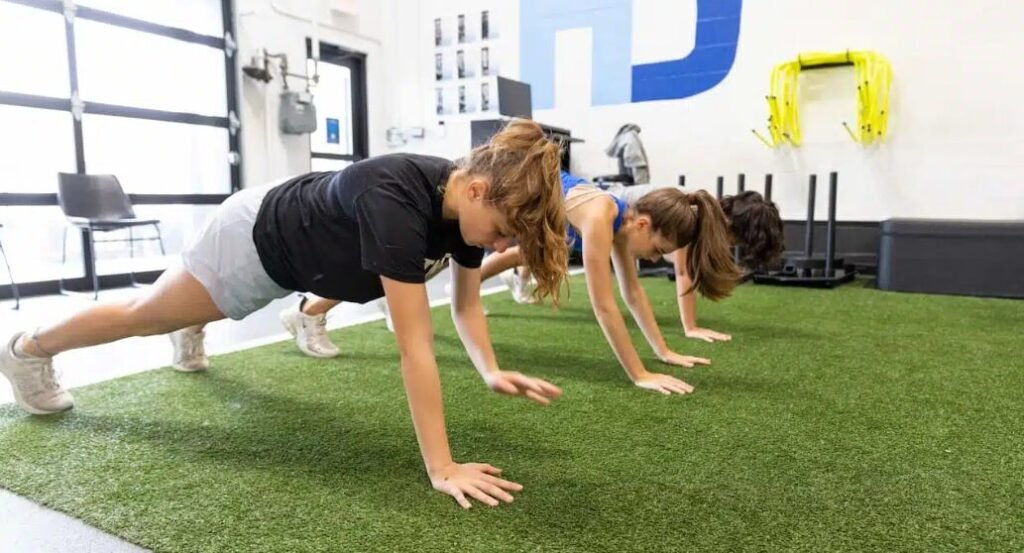
Junior athletes between the ages of eight and sixteen are navigating what sports scientists call sensitive periods — windows of accelerated adaptation where specific types of training produce disproportionate developmental returns. Speed and agility development is most responsive to training stimulus between eight and twelve. Strength development accelerates following puberty in ways that pre-pubertal training can only partially influence. Skill acquisition — the technical patterns that become automatic in competition — is most efficiently developed in the early teenage years when neurological plasticity is high and movement patterns are not yet fully consolidated. Programs that understand these windows design age-appropriate training that emphasizes the right qualities at the right developmental moments rather than applying adult training principles to young bodies whose physiology responds differently to the same stimuli.
The Role of Qualified Coaches in Youth Development
No grassroots program delivers its developmental potential without qualified coaches at the delivery end. The quality of interaction between a young athlete and their first coach is among the most powerful determinants of whether sport becomes a lifelong engagement or a brief childhood activity abandoned when the experience stops being positive. Coaches working with junior athletes require a specific skill set that differs from coaching at senior level — understanding child development psychology, managing mixed-ability groups with patience, creating environments where failure feels safe rather than humiliating, and communicating technical concepts in language that young minds can process and apply. The qualification frameworks that govern youth coaching in well-developed sporting systems reflect this understanding, requiring coaches to demonstrate knowledge of child development alongside sport-specific technical knowledge before working with young athletes.
School Sport as the Primary Delivery Mechanism
Schools represent the most efficient grassroots delivery mechanism available to any sports development system precisely because they already have access to the target population. A sports education program delivered through schools reaches children whose families would never independently seek out a sporting club or academy — it removes the self-selection barrier that means community sport programs typically attract children whose parents already value athletic participation. The quality of school sport delivery varies enormously between institutions and national contexts, but the principle is consistent: physical education that teaches movement competence across multiple activities, delivered by qualified practitioners, creates a baseline of physical literacy that every subsequent sporting experience builds upon. Countries that have cut physical education from school curricula in response to budget pressures consistently see downstream effects on youth sport participation and public health outcomes that cost far more than the savings generated.
Community Programs and the Social Return on Investment
Grassroots sport development delivers returns that extend well beyond athletic performance metrics. Community sport programs in underserved urban areas — the contexts where quality physical education and accessible sport participation are most frequently absent — consistently demonstrate positive effects on school attendance, academic engagement, and social cohesion that justify investment on non-sporting grounds alone. The mechanism is not mysterious: structured sport provides routine, belonging, goal orientation, and adult mentoring that young people in high-stress environments need and that sport can deliver with unusual efficiency. Organizations working at the intersection of sport and social development — Right to Play, Street Child, various national federation community programs — have documented these outcomes systematically enough that the evidence base for community sport investment is now robust across multiple cultural contexts and intervention types.
Technology’s Role in Modern Grassroots Sport
Digital tools have begun reshaping grassroots sports education in ways that both extend reach and introduce new complexities. Video analysis platforms once available only to professional clubs now exist in app form that junior coaches can use on tablets during training sessions, allowing immediate visual feedback that accelerates technical learning. Online coaching education has increased the number of qualified youth coaches in geographically remote areas where in-person courses were previously inaccessible. Wearable monitoring technology — heart rate, GPS, load tracking — is filtering down from elite sport into junior development programs, though the risk of over-medicalizing youth sport and creating performance anxiety around data in young athletes requires careful management. The most effective uses of technology in grassroots development are those that enhance the coach-athlete relationship rather than attempting to replace the human interaction that youth sport most fundamentally requires.
Multi-Sport Development vs Early Specialization
The debate between multi-sport development during childhood and early specialization in a single discipline has been substantially resolved by research that consistently favors the multi-sport pathway for the majority of junior athletes. Children who participate in multiple sports develop broader movement vocabularies, experience fewer overuse injuries from repetitive single-sport loading patterns, and demonstrate greater psychological resilience because their athletic identity is not contingent on success in a single discipline. The early specialization model — which produces apparent short-term advantages in sport-specific skill development — tends to produce higher dropout rates, burnout, and injury accumulation that undermines long-term athletic development. The sports that have most aggressively promoted early specialization, including gymnastics and tennis at club level, are also the sports with the highest documented rates of athlete burnout and early career termination among those who do not reach elite level.
Building Sustainable Grassroots Systems: What Works
The grassroots development programs that produce sustained competitive output — measured in athletes progressing through development pathways rather than merely participating at junior level — share identifiable characteristics that transcend cultural context. They are geographically distributed rather than concentrated in capital cities. They train and retain coaches rather than depending on volunteer goodwill alone. They run regular competition alongside training rather than treating matches as rewards for developmental progress. They connect junior programs explicitly to the next competitive level so that ambitious athletes can see a clear pathway forward. They maintain institutional continuity across changes in federation leadership and government funding cycles. And they measure success in participation breadth and athlete progression rather than the junior championship results that tempt programs into prioritizing winning over developing — the most reliable indicator that a grassroots system has confused short-term outcomes with the long-term purpose that justifies its existence.